
Context
The hospitality and tourism sector is facing seismic shifts — from evolving guest expectations and global travel resurgence to tighter staff resources, sustainability goals and higher operational complexity. According to industry analysts, AI adoption in hospitality is growing rapidly, thanks to its ability to enhance guest experiences, streamline operations and drive revenue. NetSuite
One major international hotel group (to preserve confidentiality we’ll refer to it as “the Group”) observed that achieving exceptional guest satisfaction required more than nice rooms: it demanded highly personalized service, seamless operations and real-time responsiveness. Guests expected intuitive digital experiences before arrival, personalised in-stay amenities, and swift check-out with minimal friction.
Problem Statement
Before implementing the AI transformation, the Group encountered several challenges:
-
Guest engagement was generic: Many guests received one-size-fits-all communications and offers, leading to lower upsell conversion and weaker loyalty.
-
Operational inefficiencies: Front desk and concierge teams spent significant effort on repetitive queries (e.g., local recommendations, room upgrades, late-checkout requests).
-
Under-utilised guest data: The hotel had vast data (booking history, preferences, spending patterns) but lacked an integrated analytics platform to turn it into actionable personalisation.
-
Scalability issues: With dozens of properties across regions, delivering consistently high guest experience was hard, especially during peak seasons.
-
Revenue leak: Because hands-on service was resource-intensive, many potential incremental revenue or upsell opportunities were missed.
The Group determined a strategic initiative: embed AI across guest-journey touchpoints to personalise offerings, automate routine service, and free staff to focus on high-value engagements.
Solution Approach
They executed a phased AI-enabled transformation under the programme named “Project InspiredStay,” which included:
-
Guest Insight & Personalisation Engine
-
The system combined guest profile data (booking history, room preferences, spending behaviour) with external data (seasonality, local events, weather).
-
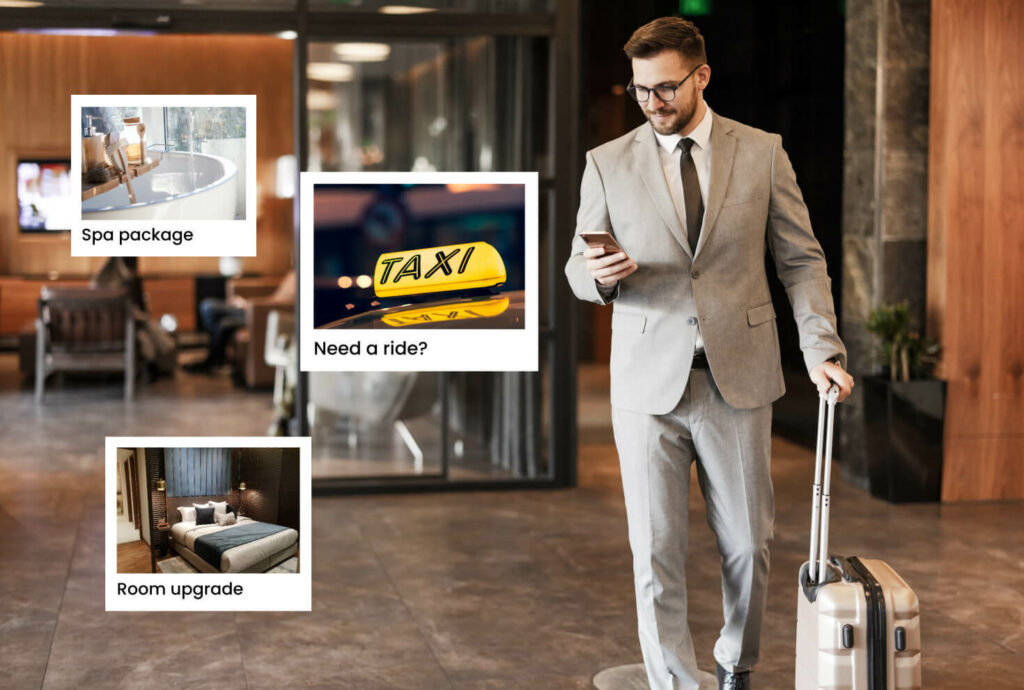
Machine learning models recommended personalised offers (e.g., spa packages, room upgrades, local experiences) at the right moment (pre-arrival, in-stay, pre-departure).
-
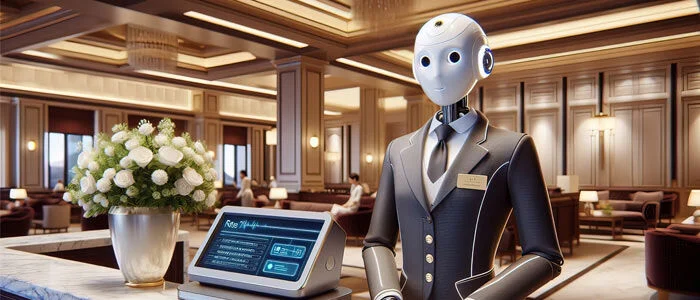
AI-powered chatbots and virtual concierges (via mobile app or in-room device) could interpret natural language queries, offer local suggestions, book services, handle check-outs.
-
-
Operational Automation & Smart Service Delivery
-
AI‐driven task-scheduling for housekeeping and maintenance improved room turnaround and reduced guest waiting times.
-
Real-time translation and voice assistants enabled multilingual guest service without requiring specialist staff. Business Insider
-
Predictive sentiment analytics monitored guest feedback (in-stay messaging, reviews) and flagged at-risk stays, enabling proactive intervention by staff.
-
-
Revenue Management & Dynamic Upselling
-
AI models analysed demand, occupancy, historical conversion and guest profiles to optimise pricing, offer timing and upsell prompts. IOVOX
-
The personalisation engine triggered tailored upsell opportunities (e.g., customised dining experience for couples, enhanced room amenities for business travellers) at optimal moments.
-
-
Scalable Platform & Governance
-
The hotel group deployed a cloud-based “Guest Experience Hub” that delivered AI models across multiple properties, regions, languages.
-
A governance framework was set up: data privacy, explainability of AI decisions, staff training on AI recommendation workflows, and continuous model refinement based on guest feedback.
-
Implementation Timeline
-
Phase 1 (Months 0-6): Pilot in three flagship properties with personalised offers and in-app chatbot.
-
Phase 2 (Months 6-18): Roll-out to additional 20 properties, launch housekeeping optimisation, predictive sentiment analytics.
-
Phase 3 (Months 18-36): Full international roll-out, dynamic pricing and upsell modules, real-time translation voice assistants.
-
Staff training, change management and guest communication campaigns were woven throughout to drive adoption.
Results & Benefits
After 24 months post full roll-out, the Group reported significant improvements:
-
Guest satisfaction (Net Promoter Score) increased by 22%.
-
Upsell conversion rates improved by 29%, contributing materially to ancillary revenue.
-
Average room-turn time decreased by 18%, enabling more efficient check-in/out flows.
-
Operational cost savings: automation of common queries and housekeeping scheduling freed up frontline staff for premium service engagements.
-
Multilingual guest servicing via real-time translation tools increased non-local guest retention by 15%.
-
Personalized offers led to higher guest spend per stay as the right experience was offered to the right guest at the right time.
As one Director of Guest Experience commented: “AI allowed our team to know the guest before they even step into the lobby — and treat them with the relevance they expect today.”
Key Lessons & Best Practices
-
Start with guest data integration: Without unified, clean data across bookings, stays, spend and preferences, personalisation will falter.
-
Prioritise value-levers early: The Group focused first on guest satisfaction and upsell before moving into housekeeping/maintenance optimisation.
-
Human-in-the-loop is essential: AI supports staff rather than replaces them; frontline buy-in and training mattered for success.
-
Governance & ethics matter: Transparent AI recommendations and compliance (guest data privacy) were integral.
-
Scalable architecture is critical: A single property’s solution won’t scale; the architecture must support multi-property deployment and continuous learning.
Why It Matters to Tourism & Hospitality
In an era where guests expect seamless digital experiences, personalisation and speed, hospitality businesses face dual pressures: deliver outstanding service and achieve operational scalability. AI provides the lever to transform the guest journey from “standard stay” to “tailored experience” while improving efficiency behind the scenes. The case of this hotel group illustrates how guest loyalty, revenue and cost-structures can all benefit from well-deployed AI.